Why UGC and Creator Content Outperforms Branded Content (And What To Do About It)
There is a quiet crisis happening inside most marketing budgets. Brands are spending significant money on professionally produced content, polished photography, carefully scripted videos, agency-developed campaigns, and watching it underperform content filmed on a smartphone by someone who simply loves the product.
This is not a fluke. It is a fundamental shift in how people make buying decisions, and the data behind it is impossible to ignore.
If your business is still leading with traditional branded content and wondering why engagement is flat, this post is for you.
What Is UGC and Creator Content?
Before unpacking the why, it helps to be clear on what we are talking about.
User-generated content (UGC) is any content about your brand created by real customers, community members, or fans. Reviews, unboxing videos, social media posts, testimonials, photos of your product in real-world settings. All of it counts.
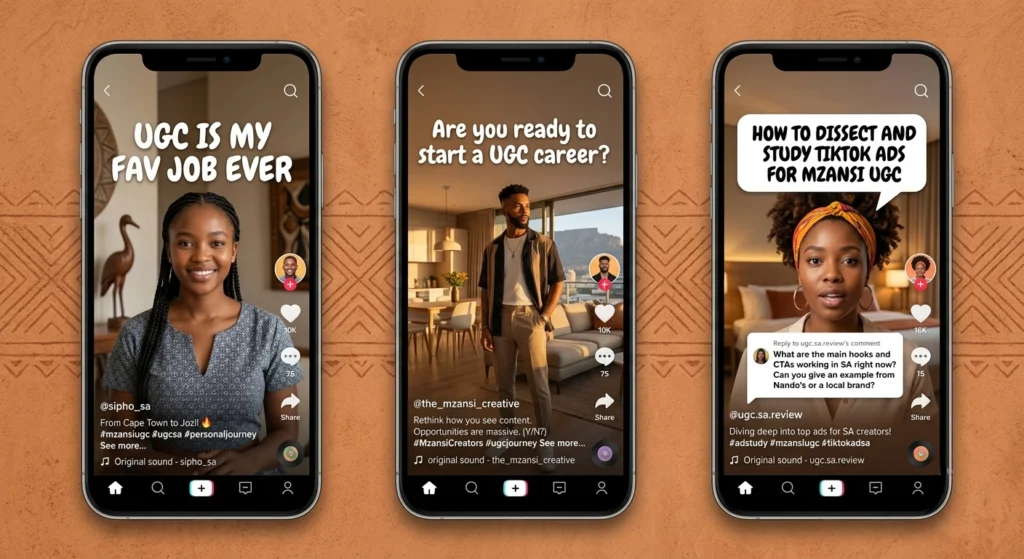
Creator content is a closely related category. Here, brands partner with content creators (not necessarily mega-influencers with millions of followers) to produce authentic-feeling content that the brand then uses in ads, on social media, on product pages, or in email campaigns. The creator may or may not post it on their own channels. What matters is the tone: it looks and feels like something a real person made, not a corporate marketing team.
The distinction from traditional branded content is straightforward. Branded content is produced by the company, controlled by the company, and looks like it. UGC and creator content carry the implicit endorsement of a real person, and that changes everything about how audiences respond to it.

The Numbers That Should Change Your Strategy
The performance gap between UGC and branded content is not marginal. It is dramatic.
UGC produces 6.9 times more engagement than brand-generated content and earns 28% higher engagement rates overall. That engagement advantage compounds over time as social media algorithms reward high-performing content with additional reach, meaning UGC posts consistently win broader organic distribution and cheaper paid amplification compared to polished branded creatives.
The conversion impact is even more striking. Consumer trust in peer-created content stands at 92%, UGC drives 10 times higher conversion rates than brand content, and brands using UGC see a 20% increase in ROI.
On the advertising side, UGC-style creatives including customer reaction videos, peer review clips, and unboxing content now outperform polished brand ads by 31% in terms of completed view rates and 29% in total conversion volume.
And the influence on actual buying decisions is consistent across the research: 79% of consumers say UGC impacts their purchasing decisions, while 73% of consumers report increased confidence in their buying decisions when they encounter UGC associated with a brand.
These are not marginal performance lifts. They represent a fundamental difference in what works.
Why Consumers Trust Real People Over Brands
The performance gap is rooted in psychology, not platform mechanics. Understanding the why is important because it tells you exactly what your content needs to do.
Social proof is hardwired into human decision-making. When potential customers see other real people using and enjoying a product, it provides a form of validation that branded content structurally cannot replicate. 79% of consumers report that UGC highly influences their purchasing decisions, compared to only 26% who trust paid advertisements. The psychological principle here is straightforward: we look to the behaviour of others to guide our own, particularly when making unfamiliar purchasing decisions.
Authenticity is now a decisive factor. 90% of consumers say authenticity is important when deciding which brands they support. Polished branded content, however well-produced, carries visible signals of corporate intent. It is designed to persuade, and audiences know it. UGC carries the opposite signal. It looks like someone sharing a genuine experience, which is exactly what it is.
The trust gap between brands and people is real and growing. The online marketing space in 2026 is saturated with AI-generated content and generic corporate messaging, which is pushing consumers further towards real voices. Authentic voices in your marketing, in the form of user-generated content, emerge as a clear game-changer, adding a layer of trust and a more human feel.
The Creator Economy Has Changed the Maths
One of the most significant developments in this space is the rise of micro-creators: individuals with between 1,000 and 10,000 followers who produce high-quality, authentic content for brands without the price tag of traditional influencer campaigns.
UGC consistently outperforms traditional branded content while costing 30 to 80% less than influencer marketing. The creator market has also matured rapidly, with growing numbers of creators producing content specifically for brand use rather than their own channels. This is content designed from the start to feel native to social media platforms, perform in paid ads, and convert viewers into customers.
Micro-creators with between 1,000 and 10,000 followers create authentic content for brands without massive influencer fees, and the performance data consistently shows that smaller, more engaged creator audiences outperform large followings when it comes to trust and conversion. A creator with 3,000 genuinely engaged followers in your product category will often outperform a celebrity partnership for a fraction of the cost.
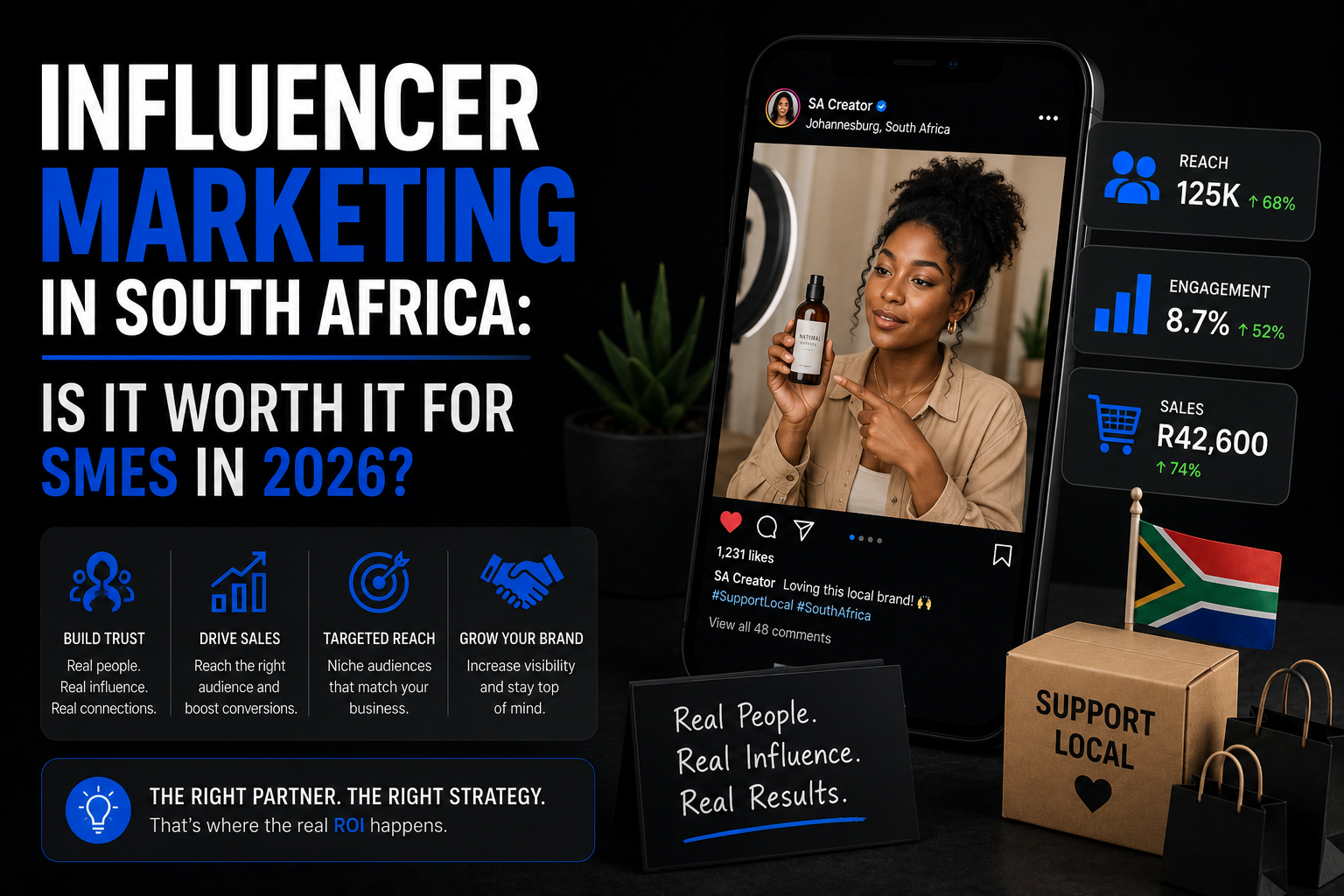
This is particularly relevant for South African businesses, where the influencer market has historically been dominated by a small number of high-profile personalities with correspondingly high rates. The micro-creator model opens up creator partnerships to businesses at almost any budget level.
What This Means for Your Brand Specifically
The data is compelling, but strategy matters. Here is how to think about incorporating UGC and creator content into your marketing in a way that actually moves the needle.
Start by making UGC easy to generate. Customers who have had a positive experience with your brand often want to share it. They just need a reason and a mechanism. Use branded hashtags, run contests or challenges, offer incentives such as discounts or shout-outs, and directly ask customers after purchases or milestones. The best UGC strategies do not manufacture content. They encourage behaviour that customers are already inclined towards.
Repurpose UGC across every channel. A customer testimonial video posted on Instagram can become a paid social ad, a product page embed, an email campaign asset, and a sales enablement piece. Brands save up to 70% on content creation costs using UGC, largely because the same asset works across multiple touchpoints without additional production investment.
Build a creator brief that prioritises authenticity over perfection. When working with creators, the instinct is often to over-brief, to specify every shot, control every message, and review every frame. This is counterproductive. Brands want content that feels fun, fresh, and scroll-stopping, not like a polished advert. A creator brief should communicate your core message and brand values clearly, then give the creator room to find their own voice within that framework.
Use creator content to test before you scale. One of the most underutilised benefits of UGC and creator content is its value as a testing tool. Before investing in a large production, use creator content to test different hooks, messages, and product angles with real audiences. The feedback loop is fast, the cost is low, and the insights can inform your broader creative strategy.
Do not abandon branded content entirely. Blend it. Marketing campaigns achieve 28% higher engagement when incorporating a strategic mix of user-generated videos alongside official brand content compared to brand-only approaches. The goal is not to replace your brand identity with UGC, but to use authentic content to build trust and let your branded content focus on communicating your positioning and values.
The SEO and Discoverability Bonus
There is an often-overlooked benefit to building a strong UGC presence: it compounds your digital visibility over time. Customer reviews contribute to your presence in local search. UGC on social platforms creates additional indexed touchpoints for your brand. And as Google increasingly rewards first-person expertise and authentic voices in its AI Overviews, content that demonstrates real customer experience carries growing search value.
UGC enhances SEO and online visibility, with customer reviews playing a critical role in purchase decisions and brand perception. This makes a UGC strategy not just a social media play, but a long-term brand visibility investment.
Where Blackdots Fits In
Integrating UGC and creator content into your marketing requires a strategy that connects your brand identity, your content production, and your paid media. It is not just a question of asking customers to post photos. It requires knowing which content formats to prioritise, how to brief creators effectively, where to deploy the content across your funnel, and how to measure what is actually working.
At Blackdot, we work with businesses across South Africa to build marketing strategies that reflect how people actually make decisions today, not how they made them five years ago. That means building content ecosystems that blend brand authority with authentic social proof, and deploying them in ways that drive measurable results.
Whether you are starting from scratch with UGC, looking to build a creator programme, or wanting to integrate authentic content into your existing paid media strategy, we bring the strategy and execution to make it work.
Ready to build a content strategy that people actually trust? Get in touch with the Blackdots team.